How Do AI Influencers Make Money? Real Numbers (2026)
Brand deals, affiliate links, digital products, licensing: how AI influencers make money in 2026, with sourced numbers, honest math and a 90-day plan.
The Muzea team · · 8 min read
The most famous virtual influencers sign deals with Prada, BMW or Samsung. Most AI influencer accounts never earn a cent. Between the two, there's a real business, but it doesn't look like the "$10,000 a month on autopilot" videos promise.
So how do AI influencers make money? Here are the five revenue streams that work in 2026, what the best-known characters actually earn, some honest math for a small account, and a 90-day plan to get your first income.
The short answer
AI influencers make money the same way human creators do, minus the ones that require a real person on camera:
- Brand partnerships: sponsored posts, stories and videos.
- Affiliate marketing: a commission on every sale through your links.
- Digital products: guides, presets, templates sold with the character as the face.
- Licensing: renting the character to a brand as an ambassador or mascot.
- Platform payouts: TikTok, YouTube and others. This is the hardest one for AI accounts.
The order isn't random: for a new account, the first two bring in money fastest.
What the famous AI influencers earn
Let's start with the numbers everyone quotes, and what they really mean.
| Character | Created by | What's known |
|---|---|---|
| Lil Miquela | Brud (Los Angeles, 2016) | Estimates range from about $5,000 to $20,000 per sponsored post. Partners include Prada, Calvin Klein, Samsung and BMW. Brud doesn't publish its figures. |
| Aitana López | The Clueless (Barcelona, 2023) | Just over €1,000 per ad and €3,000 to €10,000 a month, according to her agency's founder speaking to Euronews. |
Two things to remember:
- These are outliers backed by agencies: a team, a budget and years of consistent posting.
- Even at the top, AI influencers earn far less per post than human stars with the same audience. Brands still pay a premium for a real person.
The good news: you don't need to be Lil Miquela to earn money. A small, focused account can be profitable, as long as you're realistic.
1. Brand partnerships
It's the main income of every well-known virtual influencer. Brands like AI characters for three reasons: total control over the image, no scandals, and content that's available on demand.
What brands look for, in order:
- A niche: a vegan cook, a trail runner, a ceramist. "Lifestyle" doesn't sell, a niche does.
- An engaged audience, even a small one: 5,000 followers who comment are worth more than 50,000 who scroll past.
- A face that never changes: if the character looks different in every post, a brand can't build a campaign on it. See our method for a consistent AI character.
- Clear transparency: since August 2026, Instagram limits the reach of AI profiles that don't use the AI-generated profile label. No brand will risk an undisclosed account.
How much to charge? Small accounts usually start in the tens to low hundreds of euros per post, or with free products in exchange for content. Rates go up with engagement, not just follower count.
Here's what it looks like in practice: one character created with Muzea, four everyday scenes, and each one is a natural fit for a brand. Houseplants for a plant shop, a morning coffee for a roaster, a gym selfie for a sportswear label, a café terrace for a linen clothing brand.
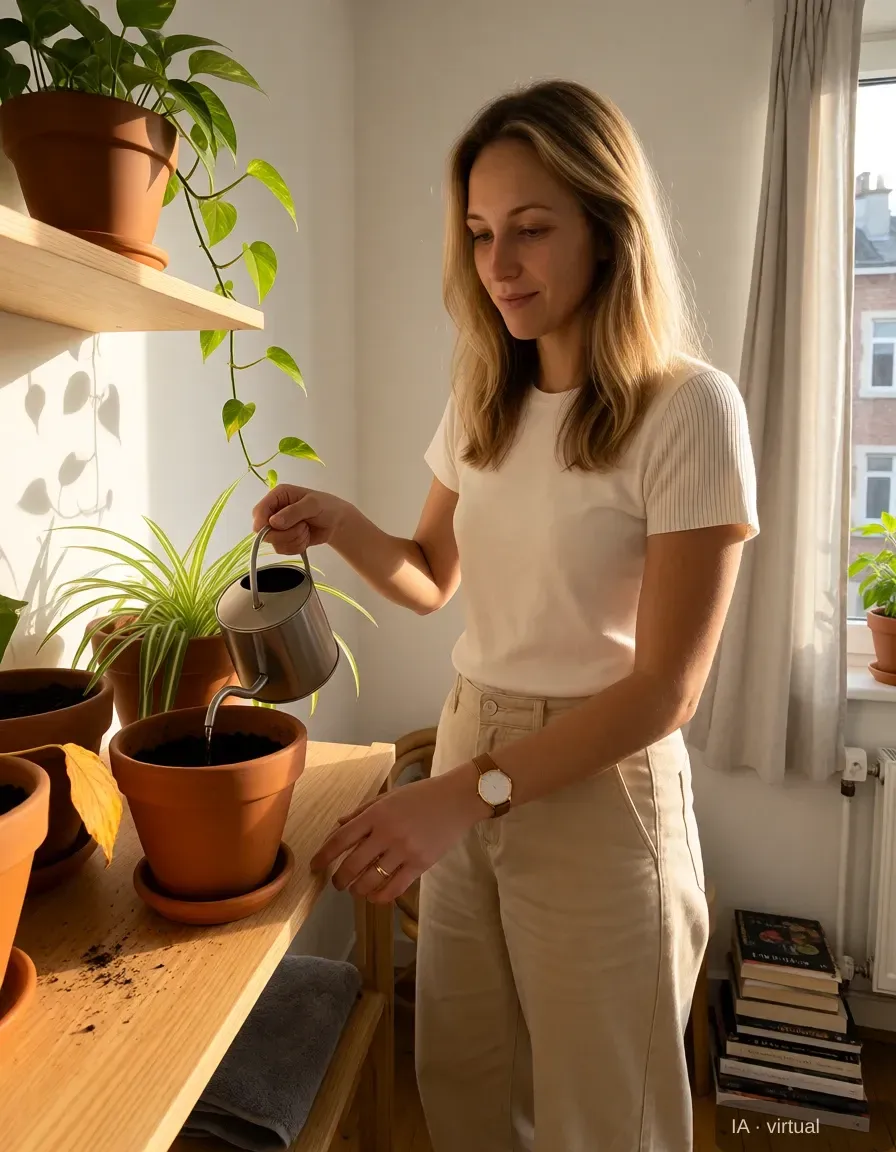

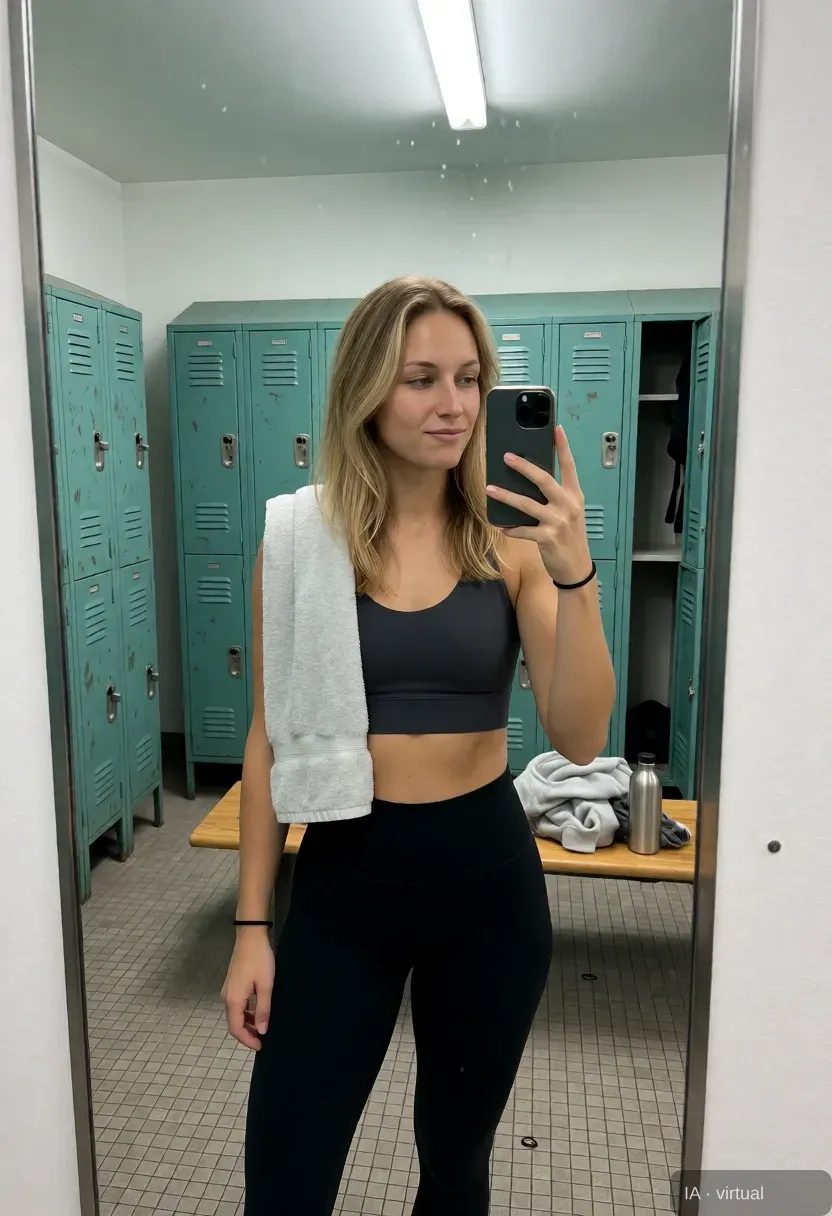

The face never changes from one scene to the next: that's what lets a brand plan a whole campaign around her.
2. Affiliate marketing
You share a link to a product. When someone buys through it, you get a commission, usually between 3% and 10% of the price depending on the program.
It's the easiest stream to start, because you don't need a brand's permission. But do the math before dreaming:
| Step | Example (weekly) |
|---|---|
| People who see your affiliate story | 1,500 |
| Clicks (3%) | 45 |
| Purchases (4% of clicks) | about 2 |
| Commission (8% of a €60 basket) | about €10 |
About €40 a month. It's small, but it grows with trust, not with luck: a character who has tested every product for months, in a precise niche (running gear, kitchen tools, budget travel), converts much better than a generic account. Affiliate income adds up when your content keeps working over time, like comparisons, "my kit" posts and tutorials.
Choose a niche where buying is natural, and your character becomes the expert people trust.
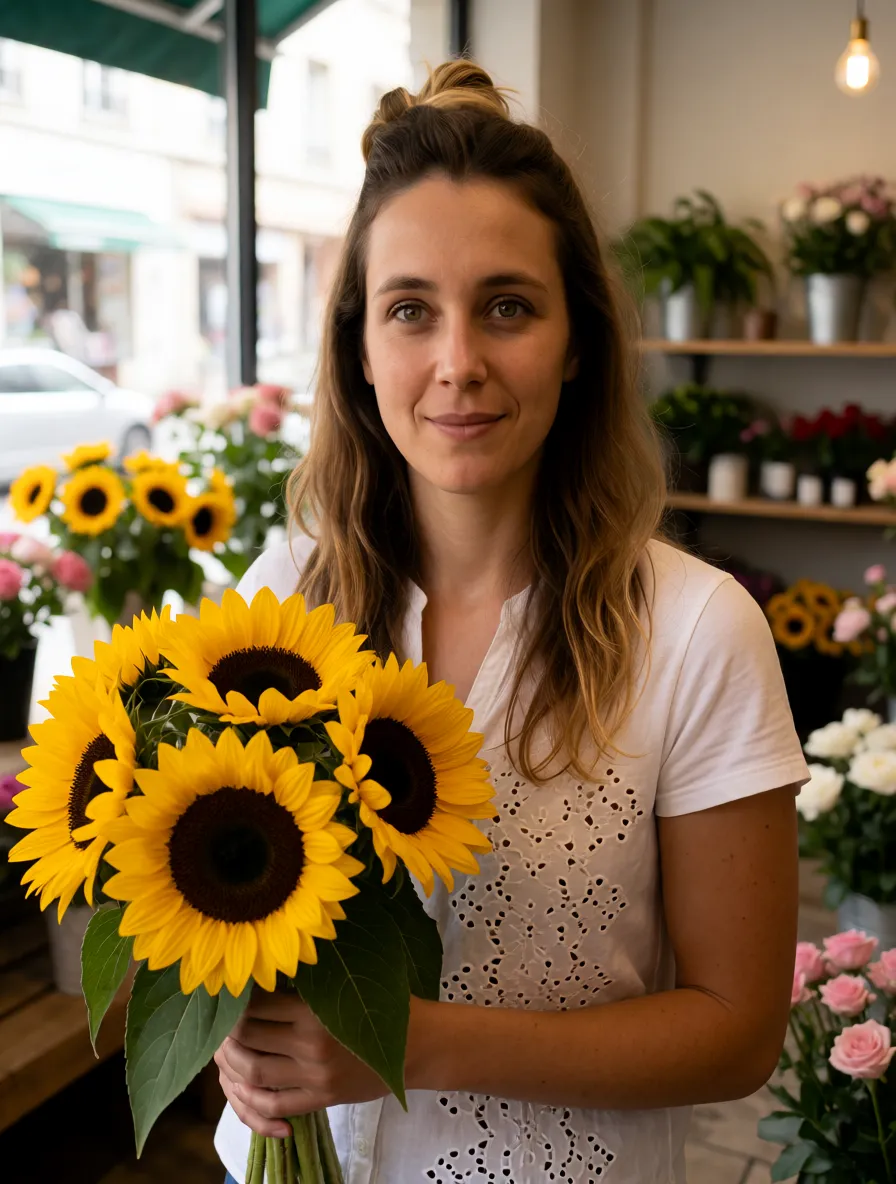
Create a niche character in one sentence
3. Digital products
The character becomes the face of a product you own: a Lightroom preset pack, a meal plan, a travel guide, a Notion template, a short course.
Why it works: the margin is close to 100%, and you don't depend on any brand. Why it's hard: you need an audience that trusts the character first. Plan it as your second step, once you have a few thousand engaged followers.
4. Licensing the character
Some creators don't run the account themselves: they design a character and license it to a brand, as an ambassador, a mascot or the face of an ad campaign. The brand gets a unique, controllable face, and the creator is paid for the design and the production of visuals and videos.
That's where consistency becomes a product: a character whose face and style stay stable across hundreds of images and short videos is worth something to a brand. In Muzea, the studio keeps the same face across scenes, captions and short videos made from a storyboard.
5. Platform payouts: the hardest stream
Platform programs exist, but they're the least reliable source for an AI account:
- TikTok Creator Rewards requires, among other things, 10,000 followers, 100,000 views in the last 30 days and videos over a minute long, and it rewards original content with real creative input.
- YouTube Partner Program asks for 1,000 subscribers plus 4,000 watch hours or 10 million Shorts views in 90 days, and it refuses mass-produced or "inauthentic" content.
- Instagram has no general revenue share for posts.
In short: if your AI character tells stories and creates original content, payouts can come as a bonus. If you post interchangeable images, don't count on them.
What it really costs
An AI influencer costs much less than a photo shoot, but it's not free:
- Tools: from €0 to test, then around €19 a month with Muzea Creator (10 characters, 150 credits a month, video included).
- Time: plan for 3 to 5 hours a week for posts, captions and replies. The character is virtual, the community management isn't.
- Patience: count on three to six months before your first meaningful income.
A realistic 90-day plan
| Month | Goal | Actions |
|---|---|---|
| 1 | Build the character | Pick a niche, create the profile and the face, post 3 to 4 times a week, turn on the AI label |
| 2 | Earn trust | Recurring formats, replies to every comment, first affiliate links on products the character "uses" |
| 3 | First brand deals | A one-page media kit, and a pitch to 10 small brands in the niche, with a free first post as a test |
At the end of the three months, you'll know what works: which formats, which products, which brands answer. Double down on that.
The first step takes a minute: describe your character in one sentence, and you get the full profile, the voice and a first portrait.
Create your AI influencer for free
Mistakes that kill monetization
- A face that drifts from one post to the next: brands notice before followers do.
- No AI label: limited reach on Instagram, and an account no brand will touch.
- A niche that's too broad: "beauty and travel and fitness" means nothing to anyone.
- Bought followers: brands check engagement, and fake followers ruin it.
- A celebrity lookalike: illegal, banned everywhere, and the quickest way to lose the account.
FAQ
Can an AI influencer really make money?
Yes. Brand partnerships, affiliate links, digital products and licensing all work for AI characters. Well-known characters like Aitana López earn several thousand euros a month, but most small accounts earn little until they've built a niche and an engaged audience.
How many followers does an AI influencer need to make money?
There's no fixed threshold. Affiliate links work from day one, small brands partner with accounts of a few thousand engaged followers, and platform programs like TikTok Creator Rewards require at least 10,000 followers.
Do brands work with AI influencers?
Yes, especially in fashion, beauty, tech and lifestyle. They value total control over the image and the absence of scandals. They do require clear AI disclosure and a character that looks the same in every post.
Is it legal to make money with an AI influencer?
Yes, as long as you're transparent. Use Instagram's AI-generated profile label, mark partnerships as ads, and in Europe follow the AI Act's disclosure rule. In France, commercial content showing an AI face or body must carry the mention "Images virtuelles".
How much does it cost to create an AI influencer?
You can create a first character for free with Muzea, without signing up. To post regularly with a consistent face, plans start at €19 a month. Most of the real cost is your time.
Read next
Instagram's AI-Generated Profile Label: What to Do Now
Instagram now limits the reach of AI influencers that skip the "AI-generated profile" label. Who needs it, how to turn it on, and how to stay compliant.
How to Create a Consistent AI Character: The Full Method
Profile, reference face, LoRA, prompts — a step-by-step method to keep an AI character recognizable across hundreds of images.