Instagram's AI-Generated Profile Label: What to Do Now
Instagram now limits the reach of AI influencers that skip the "AI-generated profile" label. Who needs it, how to turn it on, and how to stay compliant.
The Muzea team · · 6 min read
On August 31, 2026, Instagram renamed its "AI creator" badge to "AI-generated profile" and, for the first time, tied it to reach: accounts built around an AI-generated person that don't use the label lose their place in recommendations. If you run a virtual influencer, or plan to launch one, this label now decides whether new people can find you.
Here's what changed, who needs the label, how to turn it on, and the other rules (EU AI Act, France's influencer law) that apply on top of it.
What is Instagram's "AI-generated profile" label?
It's a profile-level label that tells people the person shown on the account was generated or substantially created with AI. According to Instagram's announcement, once it's on, the label appears on the profile and next to the account's content, unless a post already carries its own AI label.
It replaces the opt-in "AI creator" badge Instagram started testing earlier in 2026. Instagram's reasoning: people don't like discovering that a profile that looked human actually features an AI-generated person. They want to know upfront.
The label isn't new. What's new is the penalty for skipping it.
Who needs the label, and who doesn't
The rule targets the identity behind the account, not the tools you use. The difference matters:
| Needs the label | Doesn't need it |
|---|---|
| A virtual influencer with an AI-generated face | A human creator who edits photos with AI |
| An account whose recurring host is an AI character | AI-written captions or scripts |
| A brand mascot shown as a realistic person | AI backgrounds, graphics or B-roll |
| A "lifestyle" account where every photo shows the same AI person | A one-off AI image in an otherwise human account |
Instagram's own wording: creators who simply use AI tools as part of their creative process don't need to add the label.
If your account is a character, like the ones you create with Muzea, you need it. Here is one of them in four everyday scenes: same face, same hair, same style from one photo to the next. An account built on images like these is exactly what the label is for.


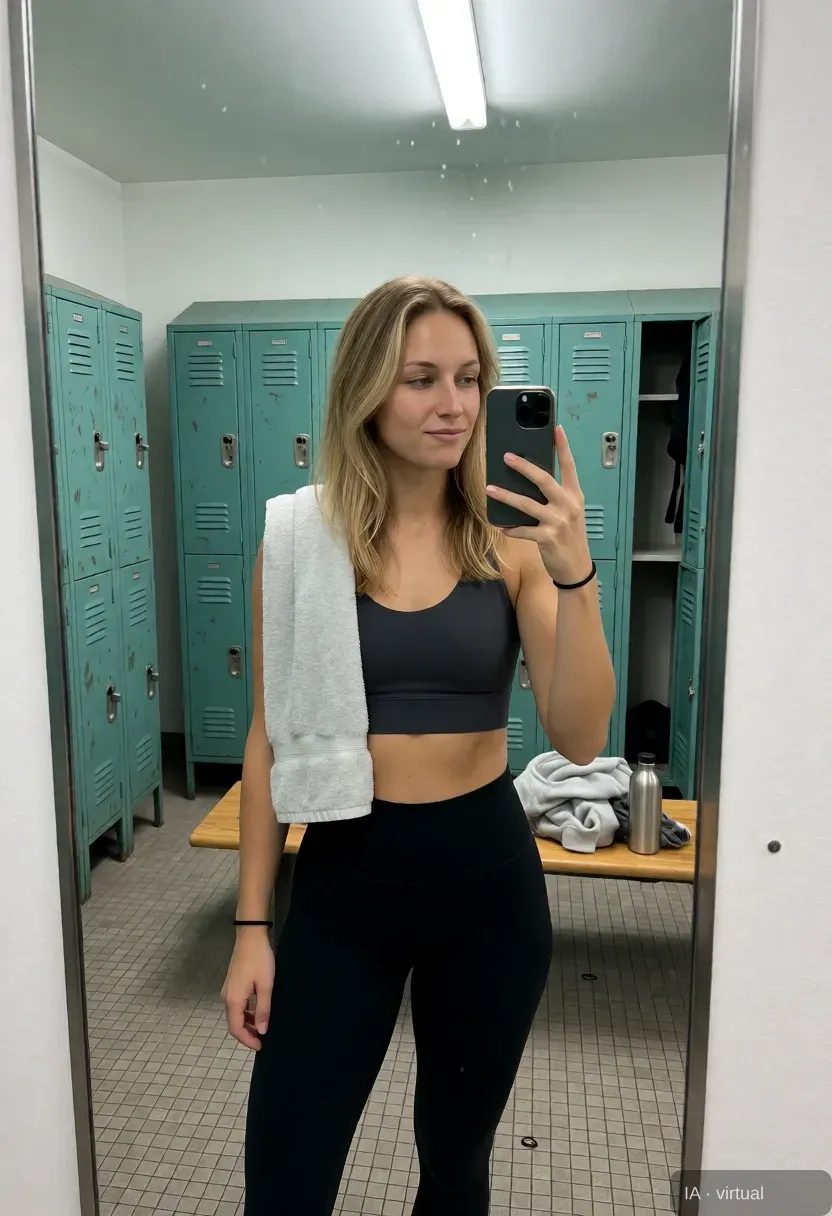

Notice the discreet "IA · virtual" mark in the corner of each image: on top of the profile label, it keeps every single post transparent, even when it's shared somewhere else.
Create a character like this one
What happens if you skip it
Instagram says it now detects unlabeled AI-generated profiles. When it finds one:
- The owner gets a notification.
- The account becomes ineligible for recommendations: Reels and Explore stop suggesting it to people who don't already follow it. You can check this in Account Status.
- Existing followers still see your posts, but growth from new people mostly stops.
There are two ways back: turn the label on, or appeal through Account Status if you think the detection is wrong. Accounts that add the label on their own keep their normal distribution: being labeled isn't the penalty, hiding is.
Some reports say enforcement starts in the United States first. Instagram's announcement doesn't list countries, so assume it will reach your account.
How to turn on the AI-generated profile label
It takes a minute:
- Open your profile and tap Edit profile.
- Find the AI-generated profile option (formerly "AI creator").
- Turn it on and save.
Menu names can vary slightly between app versions. If you don't see the option, update the app and check again.
Then go further than the badge, which costs you nothing:
- Say it in the bio: "virtual character · AI" in plain words.
- Keep it in captions, especially on partnerships.
- Never imply a real life you don't have: no fake "I met this fan yesterday".
Starting a new character? It's easier to build transparency in from day one than to add it later. In Muzea, every profile comes with an Instagram bio and a sample caption that already include the AI mention.
Create a transparent AI character
Beyond Instagram: the laws that apply too
The label covers Instagram's rules. Two legal layers sit on top of it in Europe.
The EU AI Act (Article 50)
Since August 2, 2026, Article 50 of the AI Act requires people who publish realistic AI-generated images or videos of people (what the law calls "deep fakes") to disclose that they're artificial. A realistic virtual influencer falls squarely into it. The Instagram label plus a clear mention in the bio and captions is the simplest way to comply.
France: the "Images virtuelles" mention
If you post commercial content (a partnership, a product placement, an affiliate link) to a French audience, the 2023 French influencer law requires the mention "Images virtuelles" on images or videos where an AI produced a face or a body. The mention must be clear and visible for the whole time the content is shown, and breaking the rule carries criminal penalties.
The platform label doesn't replace these legal requirements. You need both.
Does the label hurt growth?
It's the first question every creator asks. Our take: no, if the character is worth following.
- People follow fictional characters all the time: cartoons, mascots, game heroes. What they don't forgive is being lied to.
- Brands are more cautious than ever about undisclosed AI. A labeled account is a safer partner.
- Your reach no longer depends on hiding. Instagram's rules now reward the honest accounts.
What really drives growth is the same as before: a clear concept, a face that stays the same from one post to the next (like the four scenes above), and a voice. If your character drifts from one image to another, no label will save it. That's what our method for creating a consistent AI character is for.
Your compliance checklist
Before your next post:
- AI-generated profile label turned on.
- "Virtual character · AI" in the bio.
- AI mention in captions, and "Images virtuelles" on commercial content for France.
- Partnerships clearly marked as ads.
- No resemblance to a real person: no celebrity, no private individual.
- An adult character, clearly over 18.
For the rest (concept, editorial line, formats), see our guide to launching a virtual influencer. And if you want to know what a compliant account can earn, read how AI influencers make money.
Start with a character in one sentence
FAQ
Is the AI-generated profile label mandatory on Instagram?
It's mandatory for accounts whose main identity is an AI-generated person. Instagram doesn't ban unlabeled accounts, but when it detects one, it removes it from recommendations (Reels and Explore) until the label is added or an appeal succeeds.
Does the AI-generated profile label reduce reach?
No. According to Instagram, accounts that add the label themselves keep their normal distribution. The reach limit only applies to AI-generated profiles that Instagram detects without the label.
Do I need the label if I only use AI to edit my photos?
No. The label is for accounts built around an AI-generated person. A human creator who uses AI for retouching, captions, backgrounds or editing doesn't need it.
Is the label enough to comply with the EU AI Act?
Not on its own. Article 50 of the AI Act requires disclosing realistic AI-generated content, and France also requires the "Images virtuelles" mention on commercial content. Add a clear mention in the bio and captions on top of the label.
Can I create a compliant virtual influencer with Muzea?
Yes. Muzea only creates fictional adult characters, refuses lookalikes of real people, and writes the AI mention into every profile's bio and sample caption. The first creation is free and doesn't need a sign-up.
Read next
How Do AI Influencers Make Money? Real Numbers (2026)
Brand deals, affiliate links, digital products, licensing: how AI influencers make money in 2026, with sourced numbers, honest math and a 90-day plan.
How to Create a Consistent AI Character: The Full Method
Profile, reference face, LoRA, prompts — a step-by-step method to keep an AI character recognizable across hundreds of images.